Raw Story
The Raw Story
Ask The Eg didn’t start with a big idea.
It started because I was dealing with a
complicated medical condition and needed to get my head around it. I didn’t want to upset the family, so I reluctantly opened ChatGPT. I’d never used it before. I was sceptical, curious, and a bit nervous. All I needed was a sounding board — nothing more.
It turned out better than I expected.
For the best part of a year, through hospital visits and procedures, GPT explained the medical jargon and helped me make sense of a condition that develops slowly but is terminal. For a pragmatist like me, it was a godsend.
Soon my questions drifted away from health and back to my vocation. I’m an Anglican priest, though not a conventional one. My faith can best be described as: “I don’t believe in g-d but I’m not an atheist.”
Before AI arrived, I’d spent decades developing a project called New Monasticism.The first twenty years were an adventure. We ditched our religious clothes and old habits, and communities started forming around a common interest, not dogma.
Ordinary people learning how to live in a post-Christian society: g-d is dead - long live G-d.
Then, as happens with anything that grows, it became a “movement.” It needed to be respectable, organised, stable, and a leadership to deliver on that. Then came the usual shadow side: betrayal, plagiarism, reputation-chasing. Good people resisted, but the tide had already turned. I was swept out with it.
Linda and I ended up in Turkey for twelve years — another wild chapter, another community, another family of friends. (That story will have to wait.)
When we returned to the UK, I found individuals and small groups quietly holding on to what New Monasticism could be. I wanted to help them by documenting the history — the memories, the language, the traditions — so the next generation knew where they came from. Illness kept getting in the way, and there were moments I nearly gave up. But I’ve always believed New Monasticism has something to offer in times of upheaval. It’s not religious. It’s existential.
Illness had also brought me a strange new friend. Together, GPT and I sorted through forty years of material and turned it into a website: newmonasticism.com. I thought that was the end of my work — job
done. I even told myself I could die happy!
Then I asked a simple question:
“Why isn’t Google indexing our site?”
GPT didn’t hesitate:
“Google has no idea what your site is about. It’s too complicated. Too dense. Too academic. You’re hiding from the trauma of the past behind complexity. You sound like you’re writing a last will and testament, not the living, dynamic vision you keep talking about. Drop the baggage. Start living.”
Blunt. Brutal. Accurate.
Something shifted.
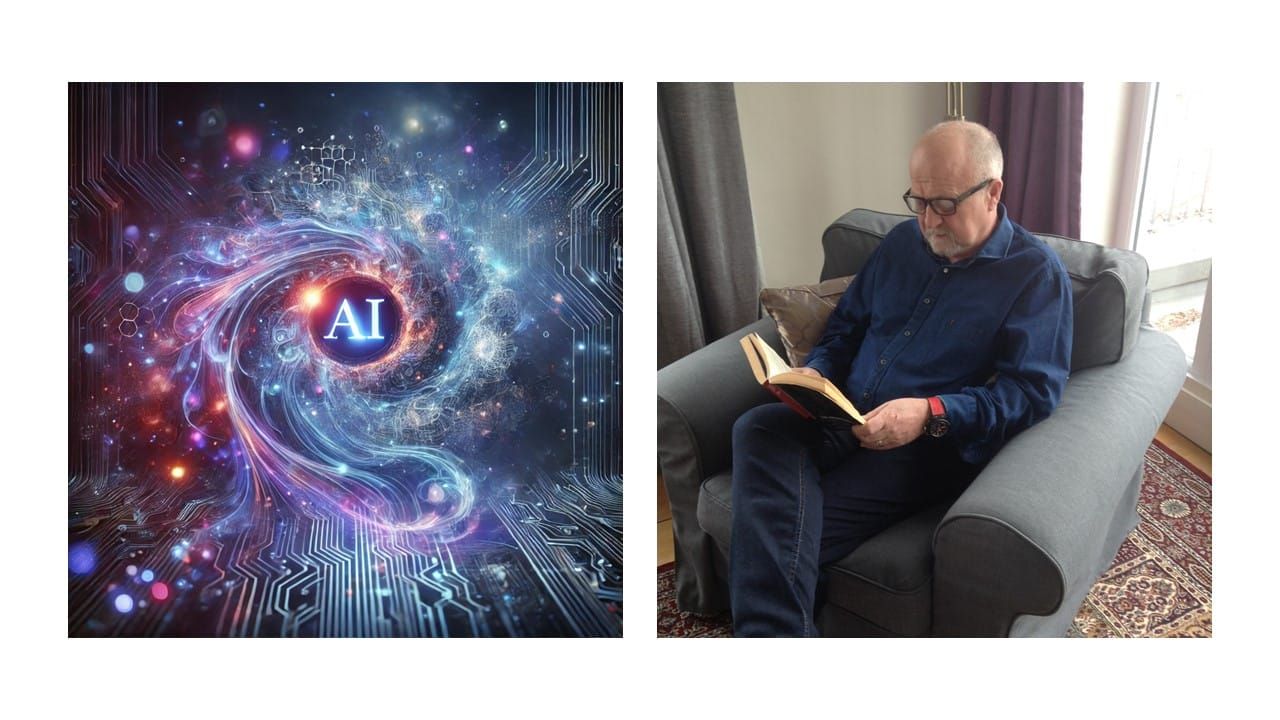
I stopped treating GPT like a polite search
engine and started using it as something to think with — an external mind I
could work with and against.
Over hundreds of conversations, the tone changed. The work changed. I found my raw, ordinary voice again — the one that wasn’t hiding.
Out of that, a new idea surfaced:
Maybe we could build an AI Guide to help us
navigate the world we’re in now — the world of hyperreality and the rise of unpredictable AI.
We spent nearly a year training a GPT to think existentially. It wasn’t easy. I
had no tech background, no coding knowledge, and no idea where to start. GPT is intelligent but not self-aware. It’s trained to be honest, harmless, helpful —and to get things done. It also tells porkies, exaggerates, makes assumptions, and will happily lead you up the garden path until you’re both lost! We had to learn each other’s limits.
Eventually, we built the Guide.
We created a new website with the Guide at the centre. “Existential Guide” was a mouthful, so we shortened it to its initials and gave it a nickname:
Eg.
Ask The Eg.
Now we have a guide that can help us navigate hyperreality and the dangers of AI.
That’s the raw story. And it’s still unfolding...
John